
If you've ever put a post in the ground — pole barn, fence, mailbox, deck, doesn't matter — you've probably had that little voice in your head asking "is this thing going to rot out in a few years?" It's a fair question. Wood in the ground, exposed to moisture and air... it makes sense to worry about it.
Here's my honest take: on a solid 6x6 pole barn post, I don't think rot is nearly the issue people make it out to be. But I learned the hard way that "probably fine" doesn't fly with everybody, and if there's a $2-a-post way to stop worrying about it entirely, why not just do it?
Do You Actually Need to Worry About Post Rot?
Realistically, for a properly set 6x6 post, rot risk is low. But if you want peace of mind for almost no money, there's no reason not to protect it.
Where Rot Actually Starts
Rot doesn't usually start at the tip buried three feet down — it starts right where the ground meets the air. That's the transition zone where moisture wicks up the wood grain, dries out, wicks up again, and slowly breaks the wood down over years. That thin band — a few inches below grade to a few inches above — is the zone that actually matters. Protect that, and you've protected the post.
My Pole Barn Mistake (and the Comments That Called Me Out)
I'll be straight with you — when I built my pole barn, I set every post with zero rot protection. Just wood straight into the ground. I figured a 6x6 is thick enough, and I wasn't wrong about the post holding up structurally. But when I posted the build online, the comments let me have it. People were convinced I'd built a pole barn that would rot out from under me in five years.
Here's that build if you want to see exactly how I set the posts:
A lot of DIYers respond to that same worry by dropping $30–50 a post on commercial post-protector sleeves or fancy ground-contact treatments. That's money you don't need to spend. You're paying for a gimmick that does the same job as something that costs a fraction of the price.
Why Flex Seal Is the Budget Fix
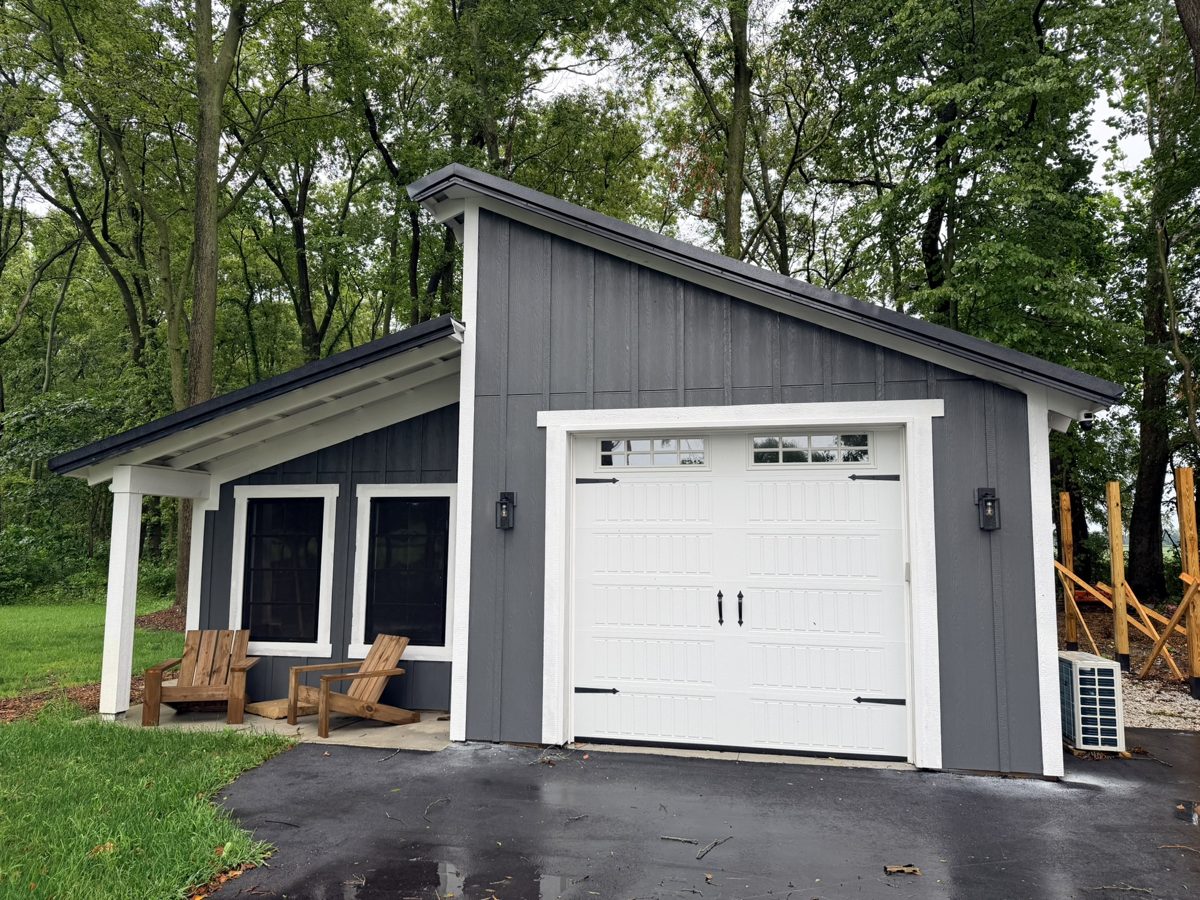
For my lean-to addition, I decided to actually protect the posts this time — not because I think the pole barn posts were a mistake, but because it costs almost nothing to do it right. I used Flex Seal Liquid — the pint can, applied with a roller and brush, not the spray cans. You get way more product and way more control over where it goes for the same money.
Cost breakdown, real numbers:
- Flex Seal Liquid per post: roughly $2–4
- Commercial post-protector sleeves: $30–50 per post
That's not a small difference — that's a gimmick tax. For a lean-to with several posts, the sleeve route would've cost me hundreds more for the same peace of mind.
It goes on thick — thicker than you'd expect from a can. Let the first coat cure for 24 hours, then hit it with a second coat. That second coat is where it really builds up a tough, rubberized barrier, and you're still only a few bucks into the whole post.
How I'm Applying It on My New Lean-To Addition
Here's the short clip of me actually doing it on the lean-to posts:
The process is dead simple:
- Make sure the post is clean and dry where it'll go in the ground
- Roll or brush Flex Seal Liquid onto the ground-line zone — a few inches above where grade will be down to the very bottom of the post
- Let it cure a full 24 hours
- Apply a second coat for extra thickness
- Let that cure before setting the post
That's it. No special tools, no pro-level skill required — just common sense and a roller.
I've got a full long-form video coming in about a month covering the entire lean-to build from start to finish, including this step in more detail. I'll drop that link here once it's live.
Where Else This Works — Fences, Mailboxes, Deck Posts
This isn't just a pole-barn thing. Any wood post going into the ground — fence posts, mailbox posts, deck posts — has that same ground-line wicking zone. Same fix applies: coat the bottom few inches above and below grade, let it cure, add a second coat, done. Cheap insurance no matter what the post is holding up.
For more on how ground contact affects wood longevity over time, Family Handyman has a solid breakdown of setting posts to resist ground-line rot worth a look if you want the deeper science behind why this zone matters.
If you're working on a pole barn build from the ground up, I've also got a video on pole barn insulation and prep that pairs well with this one.
I share the wins, the mistakes, and the "here's what actually works" stuff every week on YouTube. Subscribe to HomePro Hero so you don't miss the full lean-to build when it drops.
Does Flex Seal actually stop wood rot?
It creates a rubberized moisture barrier at the ground-line zone, which is where wicking and rot typically start. It won't make wood indestructible, but it blocks the main pathway moisture uses to break the wood down over time.
How long does Flex Seal last on outdoor wood posts?
I just applied mine, so I can't give you a long-term number yet — I'll follow up on this post as I see how it holds up. But it's rated for exterior use, and cured coats are rubberized and flexible, which helps it handle ground movement without cracking.
Do I need to treat the whole post or just the base?
Just the base — specifically the zone from a few inches above grade to a few inches below. That's where the ground-to-air transition happens and where wicking occurs. No need to coat the whole post.
Is Flex Seal better than $30–50 post-protector sleeves?
For the price, yes. At $2–4 a post versus $30–50, you're getting the same core protection — a barrier at the moisture zone — without paying for packaging and a name.
Will this work on pressure-treated posts too?
Yes. Pressure treatment already resists rot, but adding Flex Seal at the ground line is just extra cheap insurance on top of it — especially since a lot of pressure-treated lumber gets cut or drilled on-site, which exposes untreated wood.
Build it from the plans
Setting your own posts?
Post rot starts at the ground line — and the easiest time to think about it is before the posts ever go in. The 28x32 plan set covers post setting as one of its 75+ numbered steps, along with girts, purlins, rafters and siding, plus the complete material list for the whole build.
- 30 printable pages
- 75+ numbered steps
- Full material list
- Bonus SketchUp file
Instant PDF download. Drawn from the real 28x32 build, not a generic drawing.
28x32 Pole Barn Plans
The complete plan set from my real build. Two-bay layout, bookshelf girts, optional front and rear porches.