
You've got the quote sitting in front of you. The number made your stomach drop a little. And now you're doing the math in your head, wondering if you could just… build the thing yourself.
I've been there more times than I can count, wrestling with the same DIY vs hiring a contractor decision you're facing right now. I'm not a contractor — I'm a cop. Home improvement is what I do on my days off, and I've spent decades teaching myself to build real things the hard way. That's exactly why I think I can help you: I came at this the same way you're about to — a regular guy with a day job, a quote I didn't want to pay, and a stubborn streak. What I've learned is that this decision isn't about whether you can do it; it's about knowing when doing it yourself actually pays off and when it'll cost you more than the quote ever would. Because here's the thing I always come back to: no one cares more about your property than you do. A contractor is juggling six other jobs. You're building the thing you and your family are going to live with. That difference matters more than most people realize.
So let me walk you through exactly how I decide — the same gut-check I use on my own projects.
The Real Cost of Hiring a Contractor
When you hire out a job, you're not just paying for the work. You're paying for somebody else's truck payment, their insurance, their crew's wages, their overhead, and their profit on top of all of it. That's the math behind why contractor quotes feel so high — because they have to feel high for the contractor to make a living.
What you're actually paying for
A good chunk of any quote is labor markup. The materials might cost the contractor $4,000, but by the time it hits your invoice it's $4,000 plus the hours, plus the margin. None of that is the contractor being greedy — it's just how the business works. But it means a project that costs them $10,000 to build might cost you $25,000 to have built.
The "convenience tax" nobody tells you about
The flip side of hiring out is that you're buying convenience — somebody else schedules it, sources it, and shows up with the tools. That convenience is real and sometimes it's worth every penny. But a lot of guys pay that convenience tax on jobs they could've knocked out themselves with a weekend and a little research. That's the money I want to help you keep.
What DIY Actually Saves You (Beyond the Money)
The savings are the obvious part. When I built my pole barn, I figure a contractor would've charged me somewhere north of $100,000 for the whole thing. I did it for roughly a quarter of that. That's not a typo — doing it myself saved me real, life-changing money on a single project.
But the money is just the start. When you do it yourself, you control the timeline, the quality, and every decision down to the last fastener. You're not waiting three weeks for a crew to fit you in. And you walk away with a skill you keep forever — the next project gets easier and cheaper because you already know how.
Then there's the part nobody puts a dollar figure on: the pride. Standing back and looking at something you built with your own two hands hits different. Every time I pull into my place and see that barn, I know exactly what went into it. That feeling is part of why I keep doing this.
When You SHOULD Do It Yourself
Here's my honest take after a whole lot of weekends spent building things myself: you can DIY way more than you think. Most outdoor structures, decking, fencing, framing, basic finish work, painting, trim — if you've got a solid plan and you're willing to learn, you can do it. Family Handyman keeps a running list of jobs that are genuinely easier and cheaper to handle yourself than to hire out, and it lines up almost exactly with what I tell people. You can check out their breakdown of home improvements you should never pay for — it's a good reality check that you're not being cheap, you're being smart.
The key word there is plan. The difference between a DIY win and a DIY disaster usually comes down to whether you knew what you were doing before you started.
When to Swallow Your Pride and Hire a Pro
Now the other side of the coin — because I am not the guy who tells you to DIY everything no matter what. There are two hard lines for me: specialized equipment and safety.
If a job needs specialized tools or equipment rental that costs more than the job itself, that's a no-brainer to hire out. I'm not spending $2,000 on tools and rental for a $1,000 job. The math doesn't work, and the tools just collect dust afterward.
And then there's safety. Electrical, gas, main structural work, anything at dangerous heights — that stuff can kill you or burn your house down if you get it wrong, and a lot of it legally requires permits and inspections anyway. Family Handyman has a solid rundown on the projects you should never DIY for safety and code reasons, and I agree with all of it.
That right there is the move most people miss. It's not all-or-nothing.
DIY vs Hiring a Contractor: My 5-Question Gut Check
When I'm staring at a project trying to decide whether to swing the hammer or pick up the phone, I run through five quick questions:
- Skill — Do I have the skill, or can I realistically learn it from a good plan and a couple videos?
- Tools — Do I already own the tools, or is the rental cost more than the savings?
- Time — Do I have the time, and is my time worth more elsewhere right now?
- Risk — If I get this wrong, is it a redo… or is it a fire, a flood, or a trip to the ER?
- Payoff — How much am I actually saving, and is it worth the hassle?
If the skill is learnable, the tools are reasonable, the risk is low, and the payoff is real — I'm doing it myself. If it fails on risk or specialized equipment, I hire that part out. Simple as that.
The Middle Ground — DIY With a Solid Plan
Here's what I've learned: the guys who win at DIY aren't the most talented. They're the most prepared. The single biggest thing standing between a homeowner and a successful build isn't skill — it's having a real plan. Dimensions, materials lists, the right sequence of steps, the gotchas spelled out before you hit them.
That's exactly why I started putting my own project plans together — the same ones I build from. It takes the guesswork out so you can skip the expensive mistakes I already made and go straight to building. You bring the willingness to learn; the plan handles the rest.
And the long game? You won't fully realize what your DIY work is worth until you sell — and it pays to know which home improvements actually boost resale value before you pick your next project. When I see the equity I built with my own hands show up at closing, that's payday. I've rolled that equity into the next house, over and over, for years. Now my family's in our final dream house — and the work I put in will benefit them long after I'm gone. DIY isn't just saving a few bucks on a weekend. Done right, it's how you build real wealth.
- 🛠️ My go-to tools — the exact gear I trust for every build: my tools page
- 📐 Grab a plan — skip the guesswork with my downloadable DIY project plans: see all the plans
- 📺 Watch me build it — full project walkthroughs on my YouTube channel
Frequently Asked Questions
Is DIY really cheaper than hiring a contractor?
In most cases, yes — often dramatically. You're cutting out labor markup, overhead, and profit margin. On my pole barn, doing it myself cost about a quarter of what a contractor would've charged. The savings shrink only when a job needs specialized equipment you'd have to rent or buy.
What home projects should I never DIY?
Anything involving major electrical, gas lines, main structural changes, or work at dangerous heights. These can be deadly if done wrong and usually require permits and inspections. Hire those out — but remember you can still do the grunt work yourself and pay a pro only for the critical part.
How much can you save doing it yourself?
It depends on the job, but labor is typically the biggest line item in any quote. Cutting that out can save anywhere from 40% to 75% of the total cost. The bigger the labor component, the more you save going DIY.
Do I need a permit if I DIY?
Often, yes — especially for electrical, plumbing, structural work, and many outdoor structures. Permits aren't optional just because you're doing the work yourself. Always check your local building codes before you start, and pull the permit when one's required. For more project resources, see my tools page.
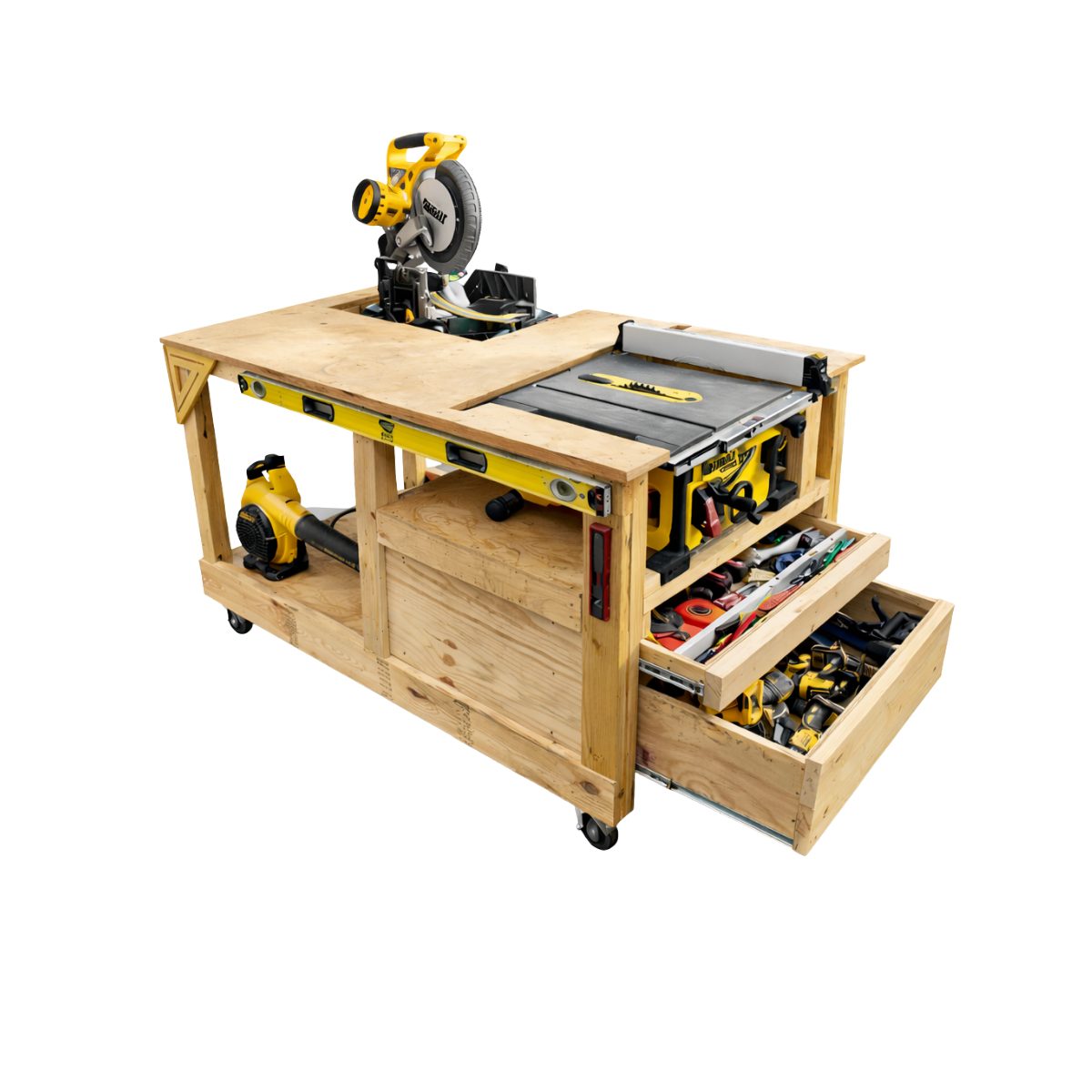
Ultimate Workshop Table Plans
The same mobile workbench from "Build This Workbench for UNDER $200," watched over a million times.