
If you're just getting into DIY and you're standing in the tool aisle trying to figure out which cordless tools to buy, stop. Put the drill down. Because the decision you're about to make isn't really about the tool in your hand — it's about the battery platform you're committing to for the next decade or more.
I learned this the easy way. About 15 years ago I grabbed a DeWalt drill combo kit that was on promo — good deal, good brand, didn't overthink it. That one decision meant every tool I've bought since has run on the same two batteries. No compatibility headaches, no drawer full of chargers, no wasted money. Just tools that work together because I picked a lane early and stayed in it.
That's what this guide is about. Let's get you set up right the first time so you don't end up with a garage full of orphaned batteries and regret.
Why Your Battery Platform Decision Matters More Than the Tool Itself
Most beginners focus on the tool. Which drill is better? Which circular saw has more power? Those are fine questions — but they're the wrong starting point.
What "Battery Platform" Actually Means
A battery platform is an ecosystem. It's a manufacturer's family of tools that all share the same battery pack. DeWalt's 20V MAX platform, for example, means one battery fits your drill, your circular saw, your jigsaw, your flashlight, and dozens of other tools in that same lineup.
The battery is the investment. The tools are just handles.
The Hidden Cost of Switching Platforms Later
Here's where beginners get burned. You buy a cheap Ryobi drill because it's affordable. Then your buddy recommends a Milwaukee circular saw. Now you've got two batteries that don't talk to each other, two chargers taking up space, and you've spent more than if you'd just picked one platform from the start.
Committing to a platform early means every new tool you add to your collection costs less — because you already own the batteries. Over time, that adds up to serious savings.
Most beginners don't think about the battery platform at all — they just grab whatever's on sale. That decision costs them hundreds of dollars down the road when they can't share batteries between tools.
The Big Three Battery Platforms — What You Need to Know
There are plenty of cordless tool brands out there, but for DIYers in the USA, Canada, and the UK, the conversation really comes down to three: DeWalt, Milwaukee, and Ryobi. Here's an honest breakdown.
DeWalt 20V MAX
DeWalt has been a trusted name in the trades for decades. Their 20V MAX platform is one of the most widely available and best-supported ecosystems on the market. You'll find DeWalt tools at virtually every hardware store, and their battery technology has evolved significantly — newer FLEXVOLT batteries are even backwards compatible with older 20V tools.
This is a pro-level platform that doesn't require you to be a pro to use it. The tools are built to take abuse on a jobsite, which means they'll absolutely hold up to weekend DIY use. The trade-off is price — DeWalt typically costs more upfront than Ryobi. But if you catch a kit deal or a promo, you can get in at a reasonable price and be set for years.
Best for: DIYers who want tools that will last, plan to build a serious collection over time, or might eventually use their tools for light professional work.
👉 The kit I run: DeWalt 20V MAX XR starter kit on Amazon
Milwaukee M18
Milwaukee is DeWalt's closest competitor at the pro level. Their M18 platform is exceptional — arguably the most innovative of the three, with a huge lineup of tools and some of the best battery technology available. Milwaukee fans are loyal, and for good reason.
The honest truth? For a beginner DIYer, Milwaukee and DeWalt are neck and neck in quality. The choice between them often comes down to what's on sale, what your buddies use, or which store is closer to your house.
Best for: DIYers who want cutting-edge battery tech and don't mind paying a premium for it.
👉 If you go this route: Milwaukee M18 FUEL 2-tool combo kit on Amazon
Ryobi ONE+
Ryobi gets a bad rap from pros, and some of it is fair — but a lot of it isn't. For a beginner DIYer building a deck, putting up a fence, or tackling home repairs, Ryobi ONE+ tools will get the job done. The ONE+ platform is one of the most expansive ecosystems out there, with over 300 tools running on the same battery.
The price point is genuinely beginner-friendly, and you can often find solid starter kits without breaking the bank. Just know that if your projects get more serious over time, you may find yourself wanting to upgrade — and that means starting your battery collection over.
Best for: Beginners on a tight budget who want to get started without a big upfront investment.
Not sure what tools to buy first? Check out my full tools section for a rundown of what to grab before your first build.
👉 If you go this route: Ryobi 18V ONE+ drill and impact driver kit on Amazon
How to Choose the Right Platform for Your Situation
Budget Considerations
If money is tight right now, Ryobi gets you in the game. If you can stretch a little, a DeWalt or Milwaukee starter kit on promotion is worth the extra spend — you're buying tools you won't need to replace.
Watch for combo kit deals. Manufacturers regularly bundle a drill, an impact driver, two batteries, and a charger at a price that's hard to beat individually. That's your entry point. Get the kit, get the batteries, then add tools one at a time.
What Tools Do You Actually Need?
Don't try to buy everything at once. Most DIY projects can be handled with just three tools: a drill/driver, a circular saw, and an impact driver. Start there. Once you're in the ecosystem, adding tools is easy — and cheaper, since you already own the batteries.
Where to Buy and What to Watch For
Buy from reputable retailers — Home Depot, Lowe's, Amazon, Canadian Tire if you're up north, or B&Q in the UK. Avoid off-brand "compatible" batteries sold by third parties. They can damage your tools and void warranties. Stick to manufacturer batteries, especially when you're starting out.
Want to geek out on the technical side? This Old House has a solid breakdown of battery voltages and amp-hours worth a read once you've picked your platform.
Common Mistakes Beginners Make When Buying Cordless Tools
- Buying tools from multiple platforms — it feels like flexibility, it's actually just expensive chaos.
- Skipping the kit and buying tools individually — kits almost always give you better value per dollar.
- Buying cheap off-brand batteries — they degrade faster and can damage your tools.
- Overbuying too soon — you don't need 12 tools when you're building your first raised garden bed.
- Ignoring voltage — higher voltage doesn't always mean better for your use case; match the tool to the job.
My Recommendation — and Why
For most beginner DIYers, here's my honest answer: pick DeWalt or Milwaukee if you can afford the entry point, Ryobi if you can't — and then stay in that lane.
I've run DeWalt for 15 years. I got in on a promo deal, and since then every tool I've added has shared the same batteries. No compatibility drama, no wasted money. My oldest batteries still hold a charge. That kind of long-term reliability is what you're really paying for when you go with a pro-level platform.
Whatever you choose, commit to it. Buy the kit, get two batteries minimum, and build from there. Future you will be glad you did.
Ready to Start Your Next DIY Project?
If this guide helped you think through your tool setup, you'll love what I've put together over at HomePro Hero. I've got downloadable project plans, tool guides, and build walkthroughs built for real DIYers — not contractors with a $50k tool budget.
👉 Check out my full tools resource section here
And if you're a visual learner, head over to the HomePro Hero YouTube channel where I walk through builds, tool reviews, and project tips the way they should be — straight talk, no fluff.
Frequently Asked Questions
Can I use DeWalt batteries on Milwaukee tools?
No. DeWalt and Milwaukee batteries are not cross-compatible. Each brand uses its own proprietary battery connection system. This is exactly why choosing one platform and sticking with it matters so much — you can't mix and match between the big brands.
Is Ryobi good enough for serious DIY projects?
For most homeowner-level DIY — decks, fences, furniture builds, home repairs — yes, Ryobi ONE+ tools will handle the work. Where they start to show limits is in heavy, sustained use like framing walls or cutting through thick hardwoods repeatedly. For that kind of work, a pro-level platform holds up better over time.
Should I buy a kit or individual tools?
Almost always buy the kit first. Starter kits bundle your most-used tools with two batteries and a charger at a price that beats buying separately. Once you're in the ecosystem, add individual tools as your projects demand them.
What's the best starter kit for a beginner DIYer?
Look for a drill/impact driver combo kit from your chosen platform. That combination covers the vast majority of beginner DIY tasks. From there, a circular saw is your next logical addition. Don't try to buy everything at once.
Does battery voltage actually matter for DIY use?
Voltage affects power and runtime, but more isn't always better for every job. A 20V drill is more than enough for most DIY tasks. Where higher voltage (like DeWalt's 60V FLEXVOLT) makes sense is for demanding tools like miter saws and table saws. Match the voltage to the tool and the task — don't just chase the biggest number on the box.
As an Amazon Associate I earn from qualifying purchases. The links above cost you nothing extra. I have run DeWalt for 15 years — the Milwaukee and Ryobi kits are the ones I would point a friend to if they chose that platform, not tools I own.
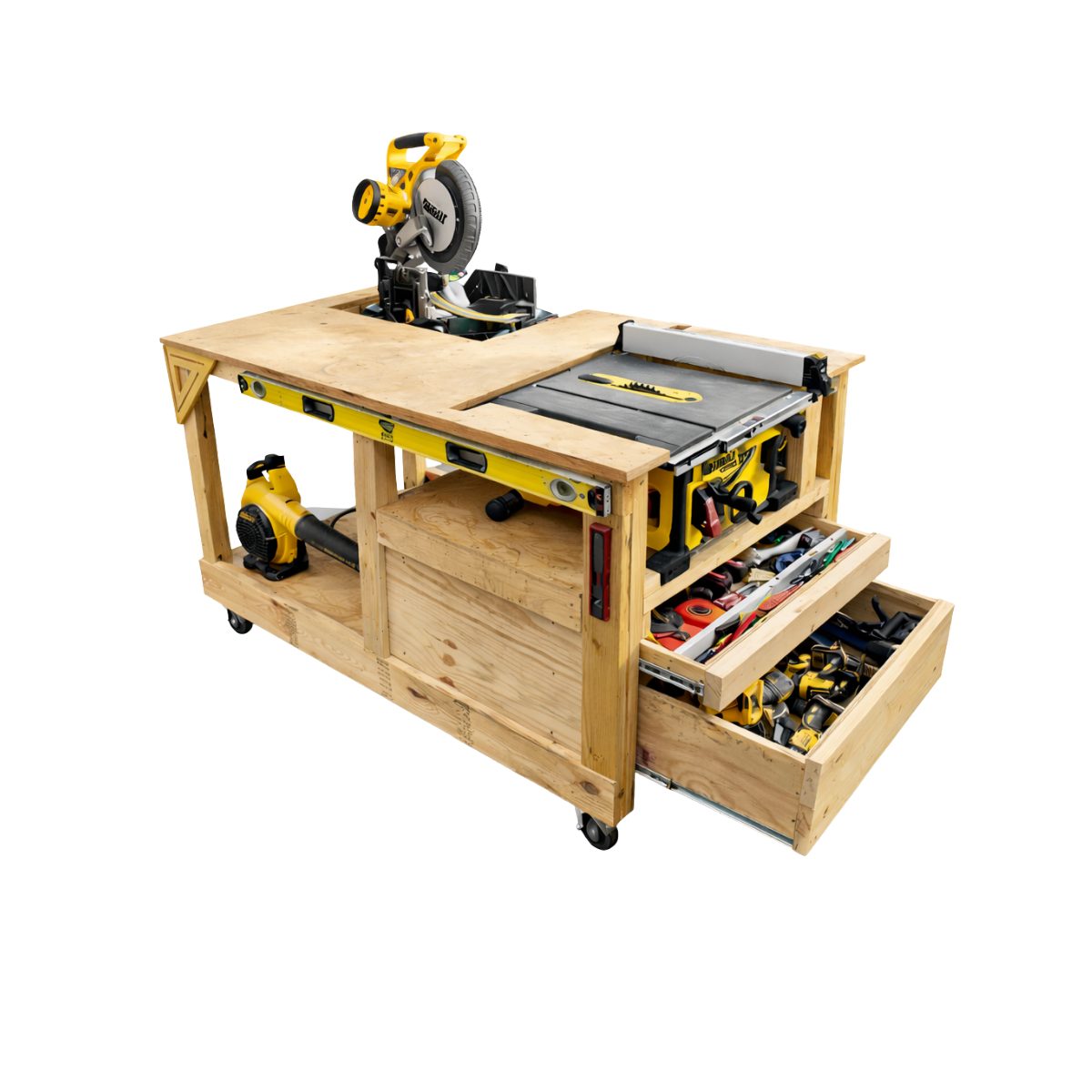
Ultimate Workshop Table Plans
The same mobile workbench from "Build This Workbench for UNDER $200," watched over a million times.