
Five years ago, my backyard was nothing but trees and grass. Today I spend more time out there than I do inside my own house, and this whole DIY backyard transformation cost me plenty of sweat but never one big check. I'm not a contractor and I'm not a landscaper. I'm a regular guy with a full-time job who built every piece of this myself, one project at a time, and a lot of it got paid for by picking up extra shifts at work.
That slow pace turned out to be the secret. Below are the five projects that completely changed how my family uses our yard, in the order I'd tackle them again, with the real timeline and the real costs that the polished "backyard makeover on a budget" articles never give you. Here's the full walkthrough video first, then I'll break down each idea:
Why I Built My Backyard "One Bite at a Time"
Before anyone assumes this took a fortune, let me kill that idea right now. You don't write one big check for a backyard like this. You build it one bite at a time, over years, paying as you go. I spread these five projects across roughly five summers, and honestly, doing it slow is what made it feel like mine.
If you're a beginner staring at your own patch of grass feeling overwhelmed, that's the most important thing I can tell you: you are not behind. Pick one project. Finish it. Live with it for a season. Then start the next one. Every space out here was built that way, and the patience is half the reason the whole thing hangs together instead of looking like a showroom someone dropped in your yard.
Idea 1: The Covered Structure That Changed Everything
If you only build one thing, build a covered structure. Mine is a pavilion I call the smokehouse, and it's roughly 11 by 22 with a 10-foot ceiling inside. It took me about 18 months from start to finish, working on it across a couple of summers. I framed it out of pressure-treated lumber in the cedar-tone color and left it natural, no stain, because that warm wood color is exactly what I wanted.
Once I put a TV, lighting, speakers, and a cooking setup under that roof, my backyard stopped being a place to grill and became a place my family actually wanted to hang out. That's the whole game with a covered DIY backyard pavilion: it brings your indoor comforts outside, so the yard competes with the couch instead of losing to it. A covered patio also buys you shade and rain cover, which is what turns "nice day" into "we live out here now."
Idea 2: Three Grills, Three Jobs (and Why One Isn't Enough)
I cook on three different grills, and it's not for show. Each one does a job the others can't.
- The offset smoker is for long weekend cooks. Barbecue takes time, and there's nothing better than sitting under the pavilion watching the meat go while the afternoon rolls by.
- The Weber kettle is charcoal, and its superpower is that it rolls. If everyone's on the patio, I roll it to the patio. If it's too hot on the patio and folks moved to the smokehouse, I roll it over there so I'm not cooking alone.
- The gas grill is my workhorse. I keep it close to the house and use it almost every weeknight. Quick, simple, and right by the door for when the weather turns.
Gas, charcoal, and wood means I never get bored out there, because there's always a different technique or a different flavor to chase. And here's the part that surprised me most: I use this yard nearly year-round. As soon as spring hits 55 to 60 degrees, we're outside. Fall might be my favorite, a sweatshirt and a fire while the Indiana trees change. Even in winter we'll bundle up, light a fire, and steal an hour or two outdoors.
Idea 3: Pavers vs Concrete — The Hardscaping Math
Most people go cheap with poured concrete or overpay for stamped concrete. Pavers solve both problems, and that's why all my walkways and patio surfaces are pavers. They run roughly a quarter of what stamped concrete costs me, they're as authentic as it gets because they are real stone, and here's the part nobody mentions: you can expand them later with no visible seams and no mismatched color from one pour to the next.
That mattered because I phased it. First I laid the main walkway and patio. Later I came back and ran a paver sidewalk out to the smokehouse plus the floor inside it, and because they're pavers, the new work tied into the old with zero ugly transition line. If you want to sanity-check the national numbers, this Bob Vila breakdown of pavers vs. concrete cost lines up with what I've seen on my own projects.
I won't sugarcoat it: pavers are tough to do. The base prep is the real work and it'll wreck your back. But the payoff when they're finished is flat-out incredible. Pair the paver runs with curved flower beds instead of straight lines and something magical happens. That harsh look of a straight concrete walkway slapped against the house disappears, and the whole yard reads as intentional instead of like stone dumped in the grass.
Run your electrical, sprinkler, and drainage lines before you lay a single paver. This is my single biggest regret out here. I laid hardscape first and then had to tear into finished work to bury wires and lines I should have run from the start. Plan for what you'll want in five years, not just what you want today, and trench it all in while the ground is still open.
Idea 4: Backyard Privacy Without a Fence
Instead of building a fence, I used trees and shrubs staggered throughout the property. It looks better, it feels natural, and it created a woody retreat that actually matches my environment, since my house sits in the woods to begin with. A fence would have looked like a fence. Staggered plantings look like the place just grew that way.
The trick is staggering, not lining them up like soldiers. I had to keep certain areas open for utilities and access, so I planted different types of trees and shrubs in an offset pattern to block the sight lines from the street while leaving the gaps I needed. If you want a starter list of plants that actually do the job, Family Handyman has a solid rundown of the best privacy plants for a backyard. One bonus nobody tells you: maintaining living privacy gives you yet another reason to be outside. Trimming and pruning and watching it fill in keeps pulling me back out there.
Idea 5: Outdoor Lighting That Turns Nice Into Magical
When the sun sets, lighting is what takes the yard from nice to magical, and most of it is genuinely beginner-friendly DIY outdoor lighting. I layer it in three heights:
- Path lights down low. They look great and they stop me from tripping during late-night cooks, which is not a small thing when you're carrying a tray of food in the dark.
- String lights at the middle height, over the patio and inside the pavilion. Dim them down and you get that classic, warm, phenomenal glow.
- Tree uplighting up high. Shine a light up into the canopy at night and it defines the whole space. It pops not just from inside the yard but from the street, too.
I also run garden candles for the medium glow, and they look like real fire, which is why my wife loves them as much as I do.
Those garden candles are one of the most-asked-about things in my whole yard, so I drew up the build plans. If you want to make your own, you can get the garden candle plans here instead of guessing at the dimensions.
Was It Worth It? Cost, Time, and Value
Five summers, a lot of weekends, and a pile of extra shifts to fund it. Was it worth it? For me, easily, but I want to be straight about why. I didn't do this as an investment play, and I'd steer a beginner away from thinking of a backyard build purely in resale terms. If that's your angle, read my breakdown of the home improvements that actually add resale value before you start spending, because outdoor living projects are about how you live, not a guaranteed return at the closing table.
What I got instead was a yard my family uses ten and eleven months a year. We have 15 to 20 fires out here annually around a smokeless fire pit, sitting in Trex chairs I'm not babysitting against the weather. The real reason I'm out here isn't the cooking or the lights or the fire, though. It's time away from a screen, outside, the way I remember it as a kid. You can't put a price on that, and you definitely can't buy it in one weekend. You build it one bite at a time.
I walk through every one of these five projects in detail over on my YouTube channel — the pavilion, the grills, the pavers, the lighting, all of it. And if the garden candles caught your eye, you can grab the build plans here. Want the rest of my downloadable project plans or my go-to gear and tool picks? The plans live in my store and the gear is all on my tools page.
Frequently Asked Questions
How much does a DIY backyard transformation cost?
There's no single number, because the smart way to do it is to spread the cost across years instead of writing one big check. I built mine over five summers and paid as I went, which kept it affordable on a regular working budget. Your cost depends entirely on which projects you take on and how much of the labor you do yourself, but doing the work yourself is where the real savings live.
Are pavers really cheaper than concrete?
Compared to stamped or decorative concrete, yes, pavers came in at roughly a quarter of the cost for me, and you also get real stone plus the ability to expand later with no visible seams. Basic gray poured concrete can be cheaper upfront, but you lose the look and the seamless expansion. The trade-off is labor: pavers are far more work to install because the base prep is no joke.
Can I build a backyard pavilion myself without being a contractor?
I did, and I'm not a contractor. My pavilion is about 11 by 22 with a 10-foot ceiling, framed from pressure-treated lumber, and it took me roughly 18 months working on it across a couple of summers. Take it one stage at a time, check your local permit rules before you start, and there's no reason a determined DIYer can't pull it off.
How do you get backyard privacy without building a fence?
Stagger trees and shrubs through your yard instead of planting them in a straight line. The offset pattern blocks sight lines from the street while still leaving the gaps you need for utility access, and it looks natural instead of walled-off. As a bonus, maintaining the plants gives you one more reason to be outside.
What's the easiest outdoor lighting for a beginner DIYer?
Start with low-voltage path lights. They're the most beginner-friendly, they make the yard look great immediately, and they keep you from tripping at night. From there, add string lights at mid-height and tree uplighting up high to layer the space. Layering by height is what creates that magical look rather than one flat wash of light.
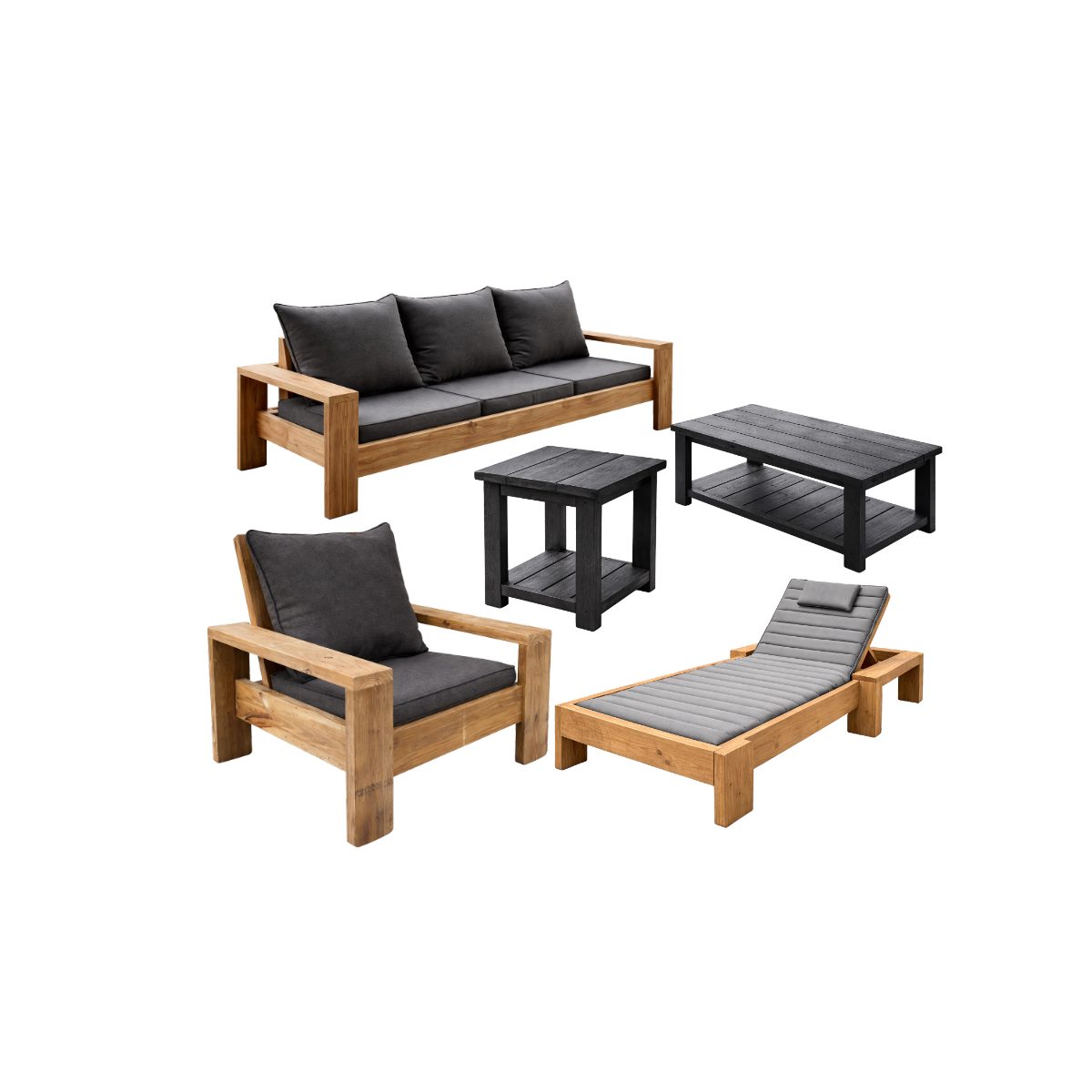
Outdoor Furniture Set: 5 Plans
Couch, chair, lounger, coffee table and end table. All five plans for the price of three.